Marie Curie
1867 · 1934
“She asked the quiet questions until they shone.”
Kept by Here After All · open to visitors
Their story
Maria Sklodowska was born in Warsaw in 1867 and made her way to Paris with little more than a fierce patience for work. In a shed that leaked rain she and Pierre weighed the invisible, named polonium for a homeland that did not then appear on any map, and taught the world the word radioactivity.
Twice the Nobel committees called her name, in physics and in chemistry, and no one had heard both calls before. When the war came she drove her small X ray cars toward the front lines herself, so surgeons could see what they were healing.
She kept her notebooks, her daughters, and her stubborn wonder close. The notebooks are radiant still.
A tribute, kept by Here After All.
Standing here now
You are standing at Marie's plot. Whoever arrives will see you here.
Words spoken here stay only with those standing here. Nothing is recorded.
Remembrances
Where the family and those who loved Marie gather, post, and return. Visitors may leave a tribute in the family's keeping.
Front page of the Washington Evening Star the day after President Harding presented her with a gram of radium, the gift of the women of America. Tired from the journey, she still opened a new laboratory that same week.
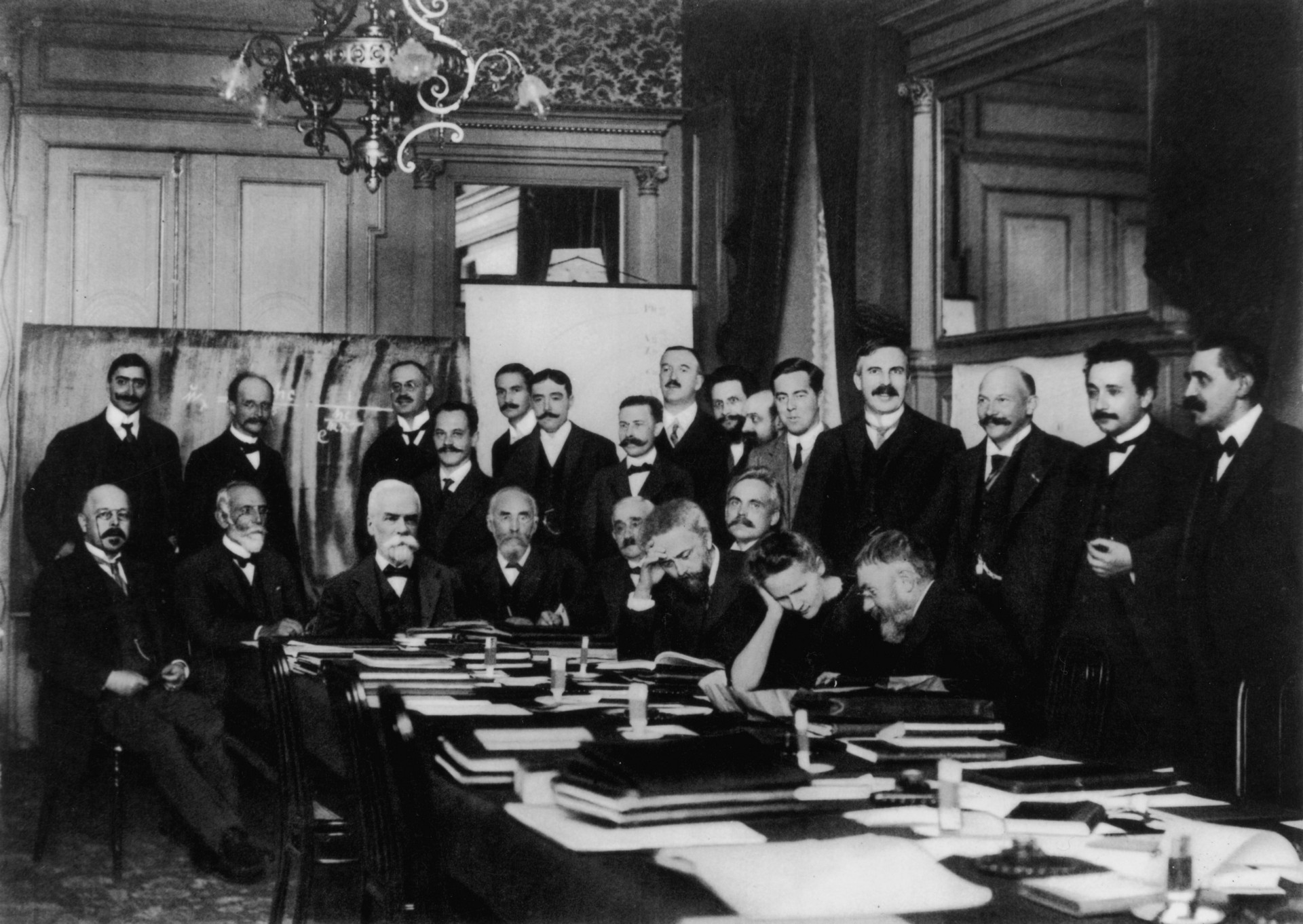
The first Solvay Conference, Brussels, autumn 1911. The only woman at the table, and she is the one deep in the pages while the room poses.
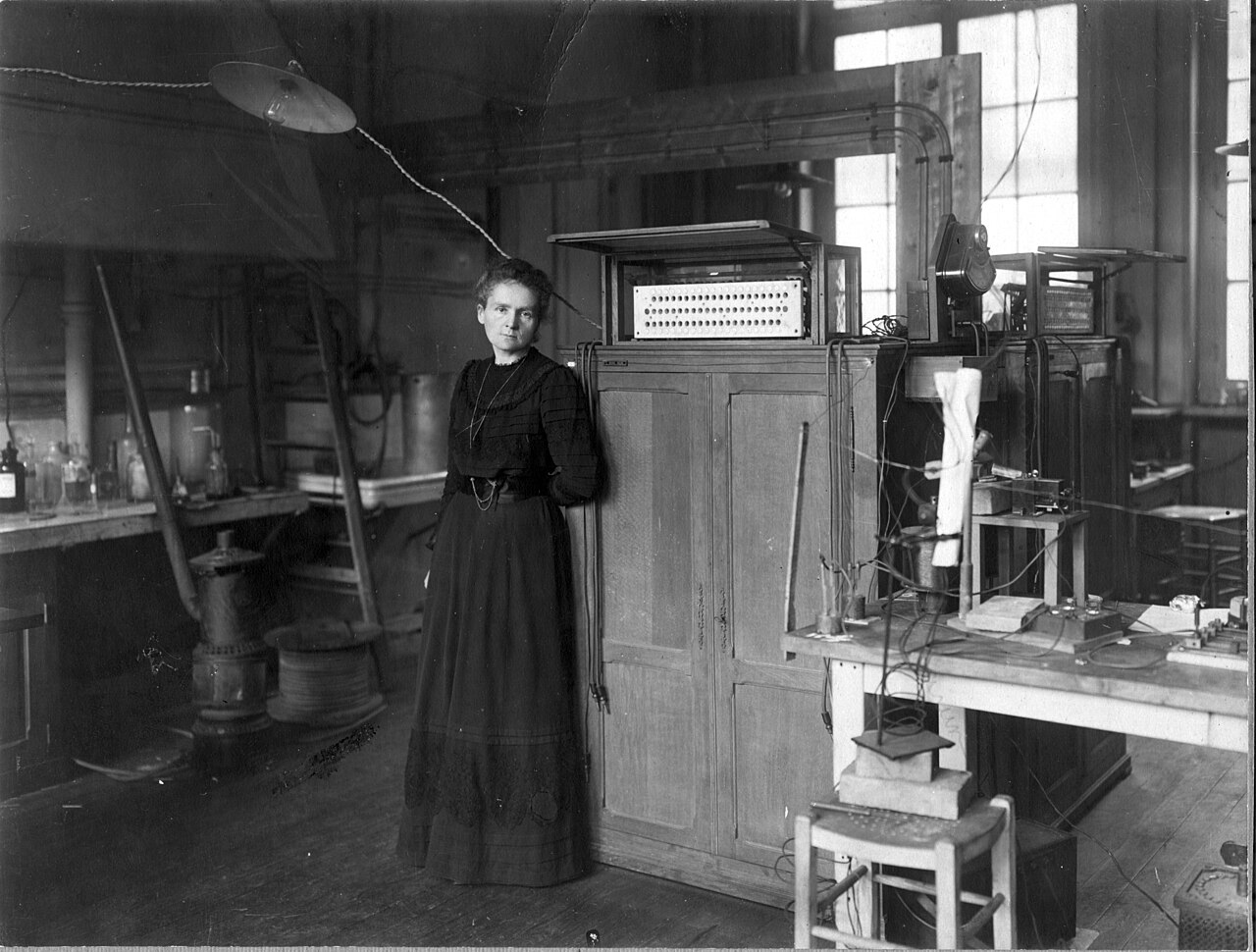
In her Paris laboratory, 1912. A plain room, a wooden cabinet of instruments, and years of patient measurement inside it.
"It was like a new world opened to me, the world of science, which I was at last permitted to know in all liberty." From her Autobiographical Notes, published with Pierre Curie, 1923.
"But we must not forget that when radium was discovered no one knew that it would prove useful in hospitals. The work was one of pure science. And this is a proof that scientific work must not be considered from the point of view of the direct usefulness of it. It must be done for itself, for the beauty of science, and then there is always the chance that a scientific discovery may become like the radium a benefit for humanity." From The Discovery of Radium, her address at Vassar College, 1921.
"It is my earnest desire that some of you should carry on this scientific work and keep for your ambition the determination to make a permanent contribution to science." From The Discovery of Radium, her address at Vassar College, 1921.
News of her Nobel Prize in Chemistry reaching Montana, the morning after the ceremony in Stockholm.
The Nobel Prize in Physics, 1903, shared with Pierre Curie and Henri Becquerel, in recognition of their joint research on radiation phenomena.
The Nobel Prize in Chemistry, 1911, for the discovery of radium and polonium, the isolation of radium, and the study of the nature and compounds of that remarkable element.
The Davy Medal, 1903, awarded jointly with Pierre Curie for their researches on radium.
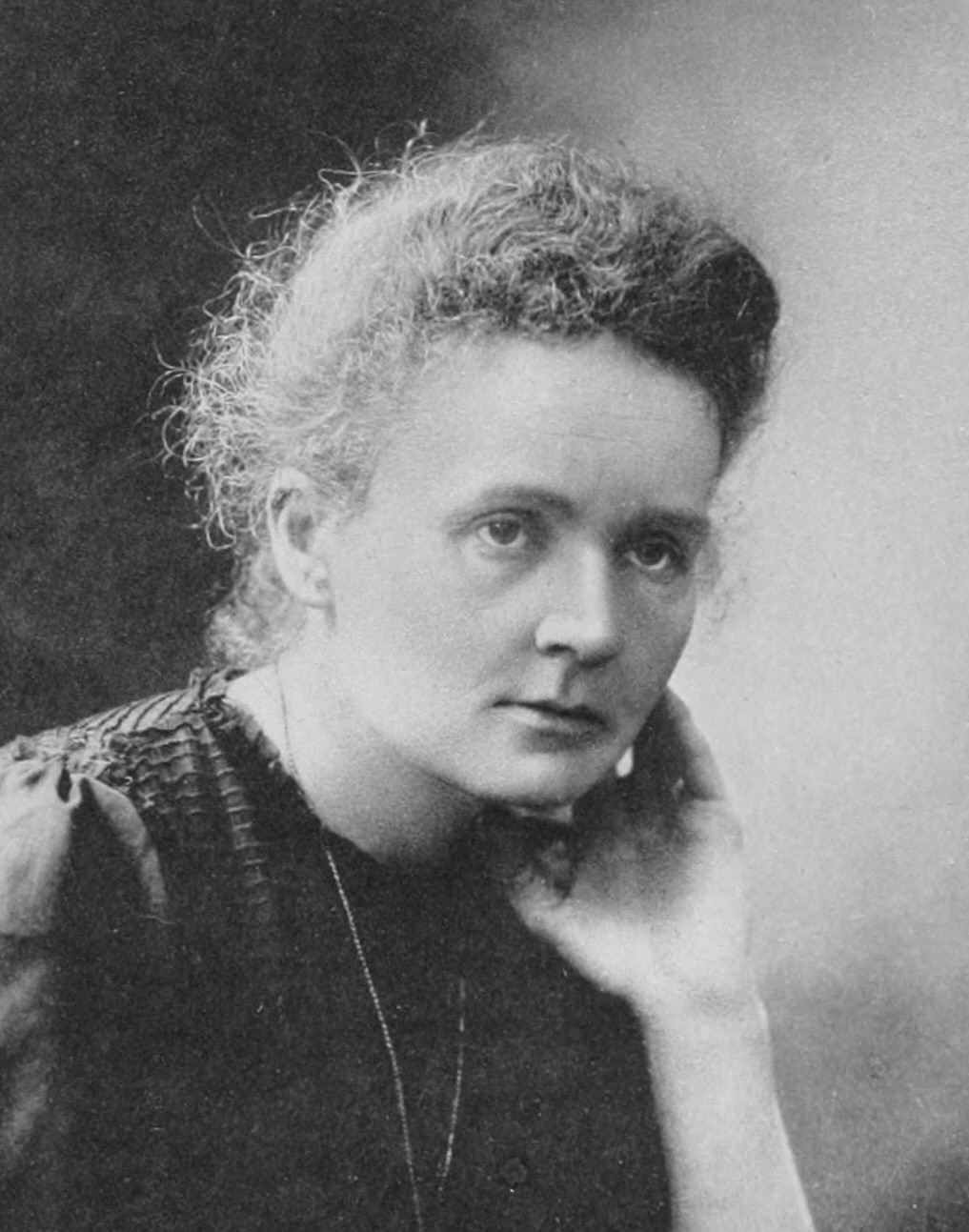
Chemistry called in 1911, the second call. She answered this one alone.
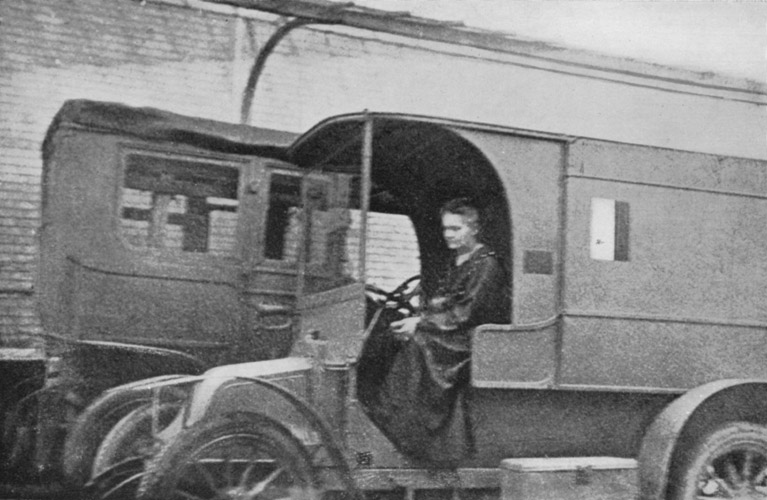
In the war years she drove a small radiology car toward the front, so the wounded could be seen clearly.
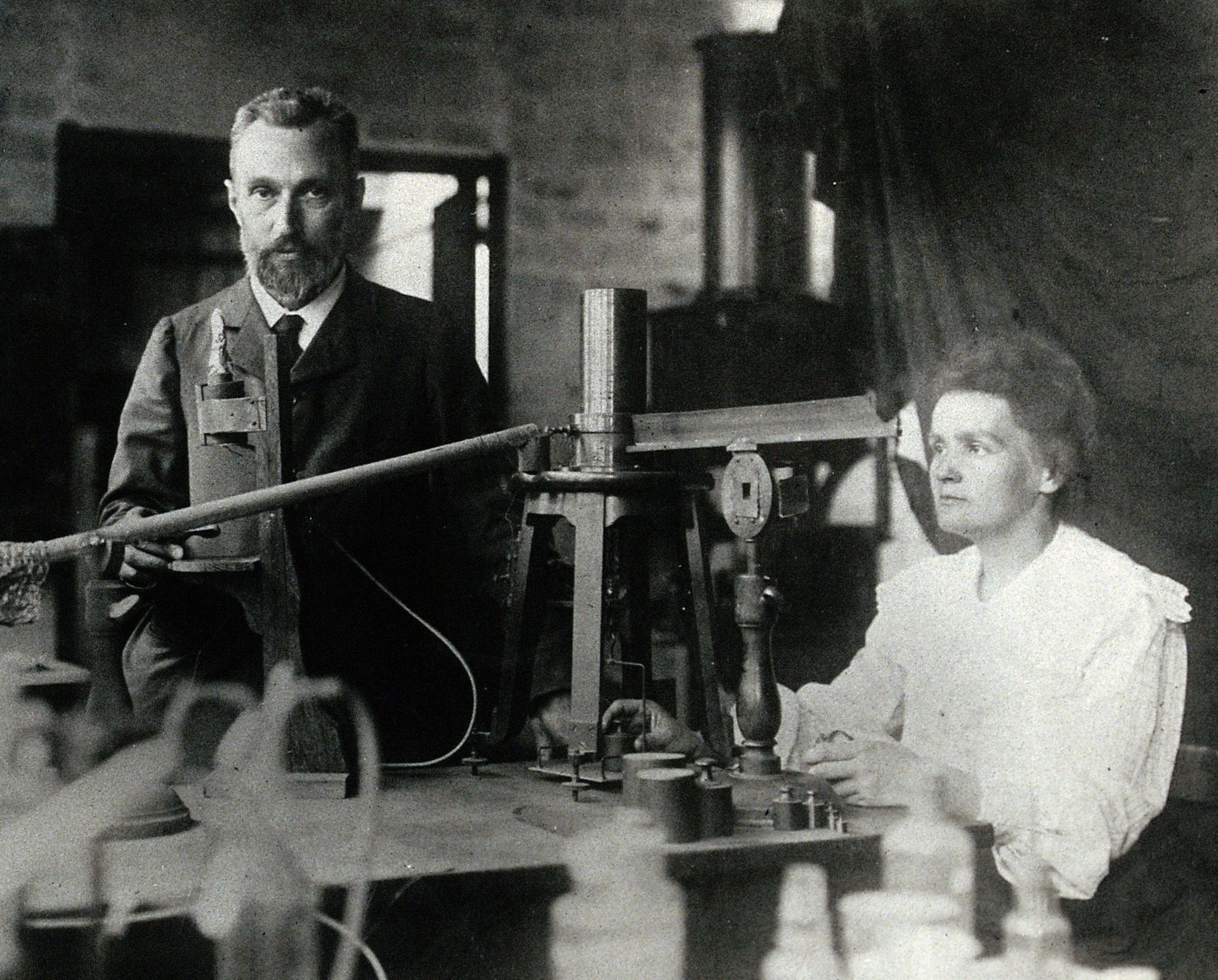
With Pierre in the laboratory, two patiences joined into one discovery.
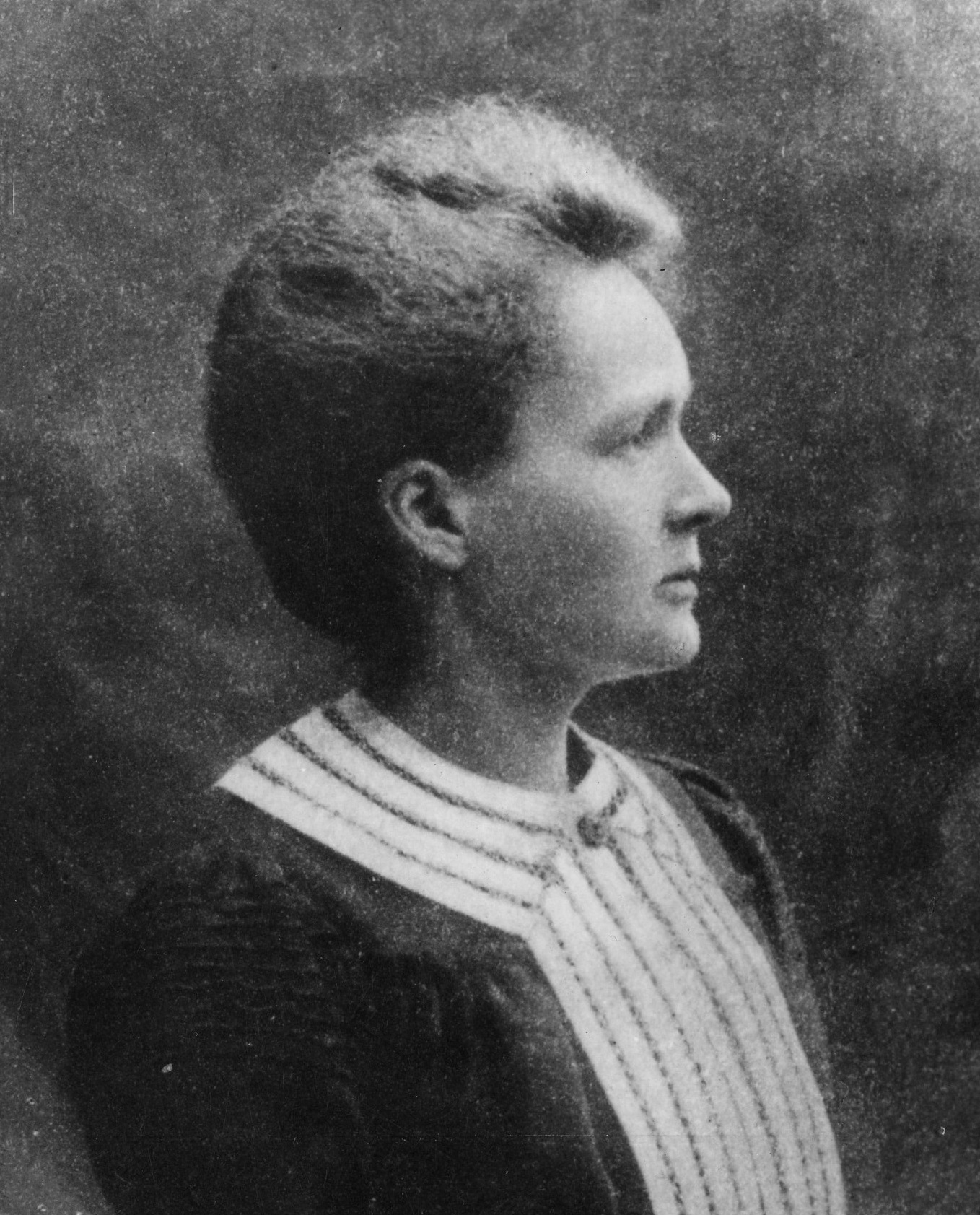
The year physics called her name in Stockholm, the first woman it ever called.