
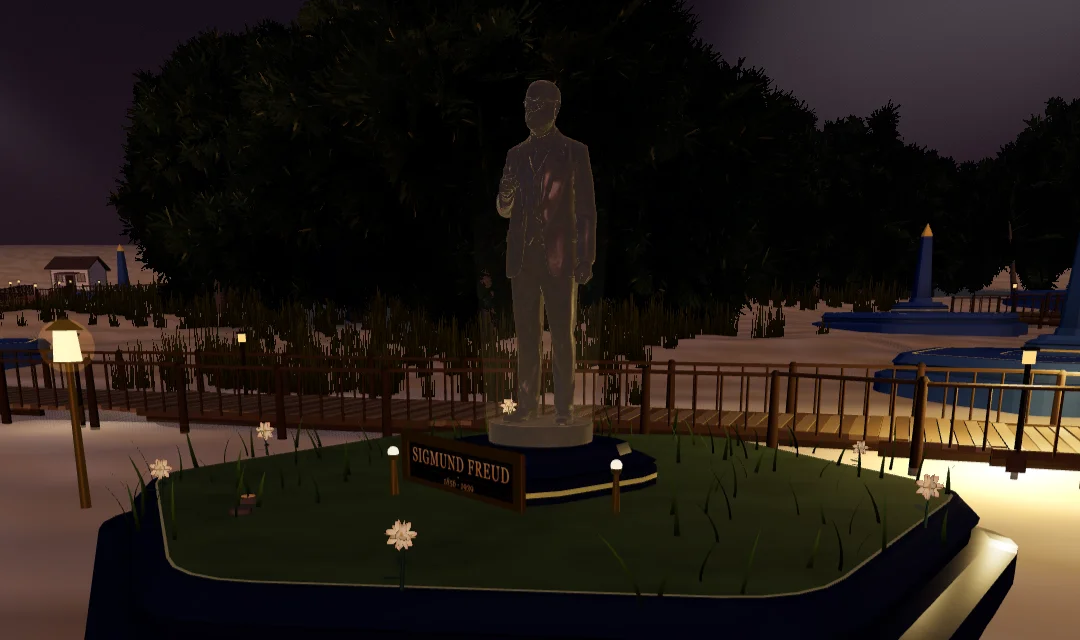
“The voice of the intellect is a soft one, but it does not rest until it has gained a hearing.”
The Future of an Illusion, 1927Sigmund Freud was born in 1856 in Freiberg, then part of the Austrian Empire, and spent nearly his whole life in Vienna. Trained as a physician, he turned his attention to the parts of the mind we cannot easily see.
He called his method psychoanalysis: listening, patiently and without judgement, to dreams, slips and free association, on the belief that much of what moves us stays hidden even from ourselves.
His ideas were argued over from the day he first published them and are argued over still, which is its own kind of monument. Driven from Vienna by the Nazis in 1938, he died in London the following year.
A tribute, kept by Here After All.
The work they left
The Interpretation of Dreams, 1900, announced the unconscious and the method for listening to it; The Psychopathology of Everyday Life found the same currents in slips of the tongue and forgotten names. Civilization and Its Discontents weighed what the social contract costs the instincts, and Mourning and Melancholia gave grief its first clinical portrait.
Psychoanalysis itself is the work: the talking cure, the couch, transference, the case histories of Dora and the Wolf Man, a vocabulary the whole century argued with and could not put down.
The estate keeps ten tributes · Fyodor Dostoevsky · Franz Kafka · Nikola Tesla · Alan Turing · Marie Curie · Arthur Schopenhauer · Emily Dickinson · Charles Darwin · Vincent van Gogh